


- What causes poison ivy, oak and sumac rash?
It all boils down to the skin's reaction to a nasty little oil
called urushiol (ooh-roo-she-all). Urushiol is found in all parts
of the poison ivy, oak and sumac plants. When urushiol gets on the
skin it binds to the skin within 10-20 minutes. At that point the
urushiol becomes extremely difficult, if not impossible, to get off
the skin with soap and water. The rash from poison ivy, oak and
sumac is the body's natural reaction to the allergen. Contact with
this annoying oil produces a rash in three out of four people. The
rash can begin within a few hours after contact, or it can start
three to five days later.
back to top
- Where do poison oak, poison ivy and poison sumac plants grow?
Poison Ivy:
Grows throughout much of North America, including all Canadian
provinces except Newfoundland (and the Territories) and all US
states except Alaska, Oregon, Hawaii and California. The plants can
grow as a shrub up to about 4 feet tall, as a groundcover, or as a
climbing vine. The color of the three almond-shaped leaflets range
from light to dark green and turn bright red in the fall. The
plant's berries are a grayish-white color.
|
Poison Oak:
Poison oak is found along the Pacific Coast of North America
including Washington, Oregon and California, and along the Atlantic
Coast. Poison oak can grow as a dense shrub in open sunlight or a
climbing vine in shaded areas. The three leaflets have scalloped
edges resembling the leaves of a true oak and can be bronze, bright
green, yellow-green or reddish depending on the season. The plant
can produce greenish-white or tan berries.
|
Poison Sumac:
Poison sumac grows exclusively in very wet or flooded soils,
usually in swamps and peat bogs, in the eastern United States as
far west as Idaho and Canada. Poison sumac has compound leaves with
7-13 leaflets, and the veins from which the leaflets grow are
always red. The plant grows as a shrub and produces fruit that is a
small white or grey berry.
|
back to top
- What does a poison oak or poison ivy rash look like?
The rash starts with itchiness and swelling, followed by a
reddish inflammation of tiny pimples. Blisters form and couple in a
chain-like reaction, and a clear fluid oozes from the blisters.
This fluid then hardens to a yellowish crust. Left untreated, the
rash (a typical histamine response) will last three to five
weeks.
back to top
- What can I do to relieve the itching from poison oak or poison ivy?
There is no cure for the poison oak or poison ivy rash once it
begins, only relief of the symptoms.
Avoid further contact with the plant oil if possible. Be sure to
wash the area with Tecnu Extreme™ Poison Ivy Scrub.
Clean your tools, clothing and pets that have been exposed to
the poison oak, ivy or sumac with Tecnu to avoid recontamination
from the urushiol oil.
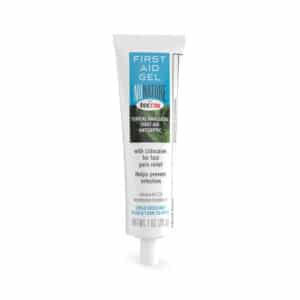
Minor itching, pain, oozing and swelling caused by poison oak
and poison ivy can be relieved with over-the-counter anti-itch
treatments such as Tecnu Rash Relief™ spray, Calagel® medicated
anti-itch gel or Corticool® 1% hydrocortisone gel. In severe cases,
a physician can prescribe antihistamine creams, tablets or
shots.
back to top
- Do the blisters cause the rash to spread?
No, the blisters are the body's natural allergic reaction to
poison ivy, oak and sumac plants. If the blisters break and ooze,
the fluid does not contain the oil that causes spreading.
Oil from the original contact with poison oak and poison ivy
will continue spreading (unless removed) for the first one or two
days. If new areas of rash appear after three days, you are most
likely getting re-exposed to the plant oil from contaminated
clothing, tools or even your cat or dog.
back to top
- How long will a poison oak or poison ivy rash last?
Mild cases of poison oak or poison ivy can last five to 12 days.
More severe cases can last 30 days or longer.
back to top
- Can I get poison plant rash from someone else?
Generally speaking, no. Once the rash appears (i.e., within 1-3
days), the original oil has all bonded to the skin, so it can't be
spread to others.
back to top
- Should I break the blisters from poison ivy, oak or sumac rash?
Never break the blisters! An open blister can easily become
infected and lead to blood poisoning. If the blisters break, cover
loosely with a sterile bandage. In severe cases, contact your
doctor.
back to top
- I've never had the rash before. Can I get it now?
Yes, you can begin getting the rash at any time during your
life. Three out of four people are sensitive to poison oak and
poison ivy. Sensitivity is just a matter of being exposed enough
times until the body has an allergic reaction to the poison
oil.
back to top
- Should I wrap or cover the rash with bandages?
Air is helpful to healing any wound. If you cover the rash with
a sterile bandage, cover loosely to allow oxygen to reach the
surface of the skin. It is important to keep the rash very clean;
changing the sterile bandage frequently reduces the risk of
infection. Seek medical attention if the rash becomes red,
feverish, or shows other signs of infection.
back to top
- Are dead poison oak or poison ivy plants safe to touch?
No, the poison oil remains intact and does not evaporate. All
parts of living or dead poison ivy, oak and sumac plants, including
the roots, contain the urushiol oil. Be especially careful of dead
poison oak and poison ivy vines on firewood and leafless vines in
the winter.
back to top
- Do I need to clean urushiol oil from clothing and tools?
Yes. The urushiol oil from poison oak and poison ivy plants will
remain on these articles and can cause a rash months, or even
years, later. Removal of the oil with Tecnu® Original Outdoor Skin
Cleanser is important to avoid contaminating through secondary
contact in the future.
back to top
- Can I get the poison oak or poison ivy rash from my pets?
Yes. Since animals' fur protects their skin from the urushiol
oil, they typically don't develop a rash. However, the oil will
remain on their fur and may contaminate you when you touch them.
Tecnu® Original Outdoor Skin Cleanser is safe to use on your pets
to remove the oil from their fur.
back to top
- Is it possible to get a rash by breathing the smoke of burning poison oak or poison ivy plants?
Yes. Urushiol can be carried in the smoke from burning leaves or
brush. If you think you have inhaled the oils, see your
physician immediately; this can be a very serious
condition. In several states it is illegal to burn poisonous
plants. Never burn them! Avoid breathing the
smoke.
back to top
- Does bleach remove the urushiol oil or help heal the rash?
No. Bleach may appear to be a quick fix to a poison oak or
poison ivy rash. However, bleach removes the top layer(s) of your
skin. Using it can irritate your skin and in the process weaken it
so that the rash may become worse, or it could lead to an
infection. Your skin may then become more sensitive to getting the
rash in the future.
back to top