


Size:
Qty:


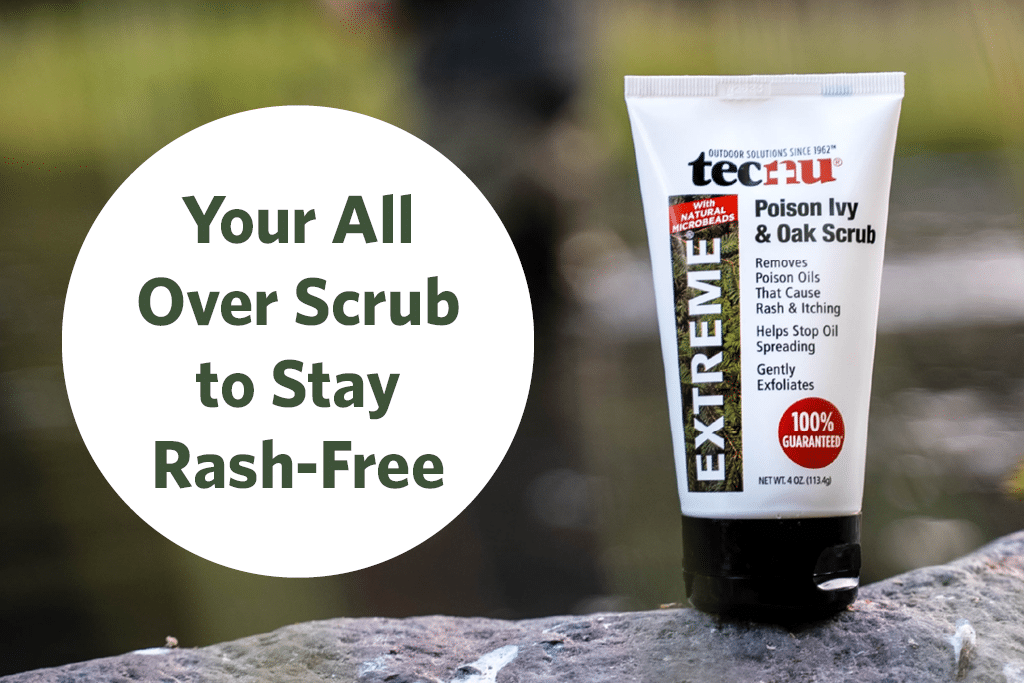
Tecnu Extreme® Medicated Poison Ivy Scrub

July Special!

Buy Tecnu Extreme, Get Tecnu Rash Relief FREE!

Limit one free bottle per order.
Offer good through July 31, 2010.

Poison ivy, oak and sumac rash is caused by the skin's reaction to the plant's oil, urushiol (oo-roo-she-all). For effective treatment, you must first remove the urushiol oil to keep it from spreading and also treat the painful, itchy inflamed rash. Tecnu Extreme is the first medicated poison ivy scrub that does both in one step. Washing with Tecnu Extreme for 15 seconds will remove urushiol oil left on the skin to keep it from spreading. Its unique homeopathic formula contains an active ingredient to relieve itching and soothe the burning rash.

Tecnu Extreme can also be used to remove the poison oil that causes rash and itching within 2-8 hours after exposure to the poison ivy, oak and sumac plants before a rash appears.

Tecnu Extreme is available in a 4 oz. tube or single use packets.


,
To see our product label including ingredients, directions and warnings, click here.

Become a fan on Facebook!

Sponsorships:

What people are saying about Tecnu Extreme

"I've used regular Tecnu for many years to provide quick relief from poison ivy and poison oak. But your new Tecnu Extreme is even better. It's easier to apply and it works faster than ever. I can count on Tecnu Extreme to save my skin whether I'm weed-whacking or brushing my dog. Thanks for improving an already terrific product!"
- Perry M., Penn Valley, CA

"Hi!!
I just wanted to say THANK YOU SOOO MUCH!! I have poison ivy all over my body, and was going absolutely crazy with the itching. I had tried soaking in oatmeal baths and applying calamine lotion, I was also applying alcohol and even straight bleach to the affected areas, but got no relief and the poison was still spreading like wildfire to other areas of my body.
So I bought your Tecnu Extreme Poison Ivy Scrub and the relief it gave me is simply AMAZING!! I love the little scrubby beads in it, because it allowed me to "scratch" the itch without breaking the skin. It is only day 2 of using your product, and already I can tell that it is healing and drying out. I know exactly what I wll do next time I even think I have poison ivy and will highly recommend it to anyone I know who needs it.
A thousand thanks for the relief!"
Jo Randazzio

"I attended an occupational health and safety conference in July of this year. I am a safety consultant that works for the Kentucky School Boards Insurance Trust. While working my way through the safety expo I came across your product, Tecnu Extreme. I listened intently as the pitch-man told me of how your product worked and what it would do for a person affected with poison ivy, oak or sumac.
After hearing his pitch, I explained to him that I had an outbreak on me at the time. He offered me a sample and told me to take it and try and get back with him as to the results. I left with the sample, thinking, yea, right, more snake-oil (ever the skeptic). I went back to my hotel room and proceeded to take a shower and wash the effected areas with Tecnu Extreme. Literally within minutes I was no longer itching, and the rash had begun to disappear. By the next day, the redness was gone. It blew me away as I had been having issues with the trifecta of poisons for years and all of a sudden a product that is making it go away.
Needless to say, I went back to the vendor booth and told him that I was sold!!! In my line of work as a consultant to school districts, I often see groundskeepers who are itching away from one of the poison trifectas. I immediately recommend your product and now that I know it is relatively easy to get, I tell everyone that complains about poison ivy, oak, or sumac. It really works!!!!"
-M. Terrell, Cadiz, KY

"Dear Tecnu, I wanted to thank you for sponsoring the Wicked 24 adventure race as part of the 2008 gorge games. Also, I wanted to let you know that the sponsored Tecnu team were a delight to race along side of. Our paths crossed many times over the grueling 24hr race and they were always cheerful, motivated, and good ambassadors of your product. They handed out trial samples before the race that I used afterwards and I have not had any outbreak at all even though I did substantial bushwhacking and certainly was exposed.
Best Regards, Rachael Parker

Disclaimer: Testimonials appearing on this site are real life experiences of those who have used our products. These are individual results, and we do not claim they are typical results that consumers will generally achieve.

Frequently Asked Questions
What causes poison ivy, oak and sumac rash?
It all boils down to the skin's reaction to a nasty little oil called urushiol (ooh-roo-she-all). Urushiol is a toxic, resinous type substance that is found in all parts of the poison ivy, oak and sumac plants. When urushiol gets on the skin it binds to the skin within 10-20 minutes. At that point the urushiol becomes extremely difficult, if not impossible, to get off the skin with soap and water. The rash from poison ivy, oak and sumac is the body's natural reaction to the toxin. Contact with this annoying oil produces a rash in three out of four people. The rash can begin within a few hours after contact, or it can start three to five days later.
Where do poison oak, poison ivy and poison sumac plants grow?
Poison oak, poison ivy, poison sumac and other members of the Rhus family grow in all portions of the North American continent (except Nevada, Alaska, and Hawaii) at elevations below 4,000 feet with a rainfall above eight inches per year.
What does a poison oak or poison ivy rash look like?
The rash starts with itchiness and swelling, followed by a reddish inflammation of tiny pimples. Blisters form and couple in a chain-like reaction, and a clear fluid oozes from the blisters. This fluid then hardens to a yellowish crust. Left untreated, the rash (a typical histamine response) will last three to five weeks.
What can I do to relieve the itching from poison oak or poison ivy?
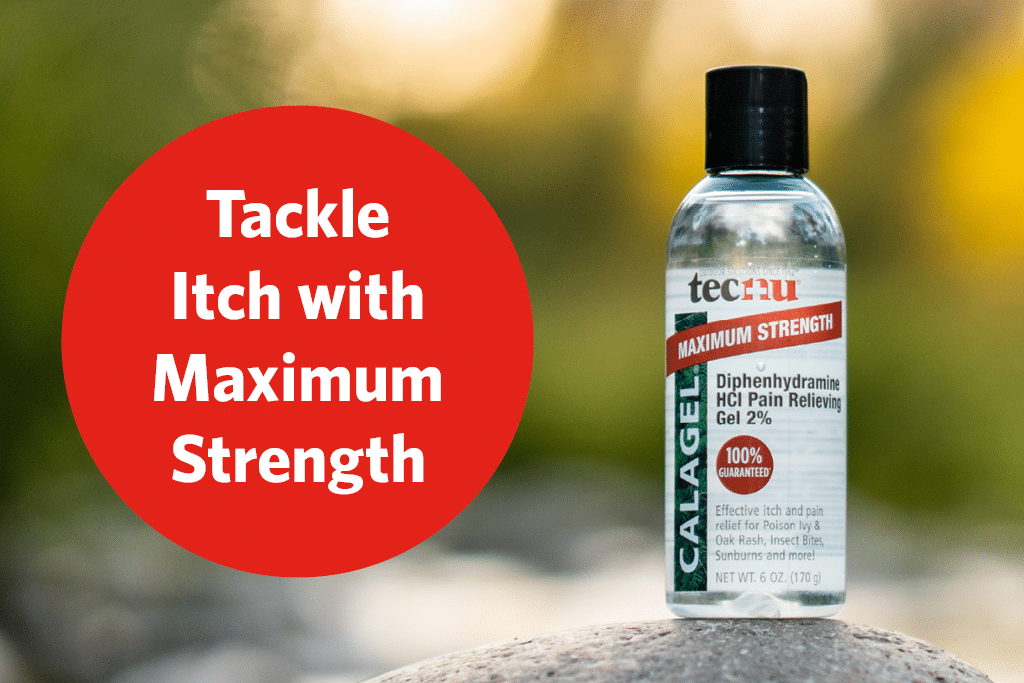
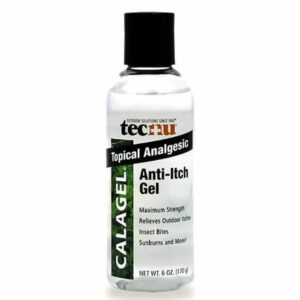
There is no cure for the poison oak or poison ivy rash once it begins, only relief of the symptoms. Avoid further contact with the plant oil if possible. Be sure to wash the area with Tecnu® Outdoor Skin Cleanser or Tecnu Extreme™ Poison Ivy Scrub. Clean your tools, clothing and pets that have been exposed to the poison oak, ivy or sumac with Tecnu to avoid recontamination from the urushiol oil. Minor itching, pain, oozing and swelling caused by poison oak and poison ivy can be relieved with over-the-counter anti-itch treatments such as Tecnu Rash Relief™ spray, Calagel® medicated anti-itch gel or Corticool® 1% hydrocortisone gel. In severe cases, a physician can prescribe antihistamine creams, tablets or shots.
Do the blisters cause the rash to spread?
No, the blisters are the body's natural allergic reaction to poison ivy, oak and sumac plants. If the blisters break and ooze, the fluid does not contain the oil that causes spreading. Oil from the original contact with poison oak and poison ivy will continue spreading (unless removed) for the first one or two days. If new areas of rash appear after three days, you are most likely getting re-exposed to the plant oil from contaminated clothing, tools or even your cat or dog.
How long will a poison oak or poison ivy rash last?
Mild cases of poison oak or poison ivy can last five to 12 days. More severe cases can last 30 days or longer.
Can I get the rash from someone else?
Generally speaking, no. Once the rash appears (i.e., within 1-3 days), the original oil has all bonded to the skin, so it can't be spread to others.
Should I break the blisters?
Never break the blisters! An open blister can easily become infected and lead to blood poisoning. If the blisters break, cover loosely with a sterile bandage. In severe cases, contact your doctor.
I've never had the rash before. Can I get it now?
Yes, you can begin getting the rash at any time during your life. Three out of four people are sensitive to poison oak and poison ivy. Sensitivity is just a matter of being exposed enough times until the body has an allergic reaction to the poison oil.
Should I wrap or cover the rash with bandages?
Air is helpful to healing any wound. If you cover the rash with a sterile bandage, cover loosely to allow oxygen to reach the surface of the skin. It is important to keep the rash very clean; changing the sterile bandage frequently reduces the risk of infection. Seek medical attention if the rash becomes red, feverish, or shows other signs of infection.
Are dead poison oak or poison ivy plants safe to touch?
No, the poison oil remains toxic and does not evaporate. All parts of living or dead poison ivy, oak and sumac plants, including the roots, contain the urushiol oil. Be especially careful of dead poison oak and poison ivy vines on firewood and leafless vines in the winter.
Do I need to clean urushiol oil from clothing and tools?
Yes. The urushiol oil from poison oak and poison ivy plants will remain on these articles and can cause a rash months, or even years, later. Removal of the oil with Tecnu® Outdoor Skin Cleanser is important to avoid contaminating through secondary contact in the future.
Can I get the rash from my pets?
Yes. Since animals' fur protects their skin from the urushiol oil, they typically don't develop a rash. However, the oil will remain on their fur and may contaminate you when you touch them. Tecnu® Outdoor Skin Cleanser is safe to use on your pets to remove the oil from their fur.
Is it possible to get a rash by breathing the smoke of burning poison oak or poison ivy plants?
Yes. Urushiol can be carried in the smoke from burning leaves or brush. If you think you have inhaled the oils, see your physician immediately; this can be a very serious condition. In several states it is illegal to burn poisonous plants. Never burn them! Avoid breathing the smoke.
Does bleach remove the urushiol oil or help heal the rash?
No. Bleach may appear to be a quick fix to a poison oak or poison ivy rash. However, bleach removes the top layer(s) of your skin. Using it can irritate your skin and in the process weaken it so that the rash may become worse, or it could lead to an infection. Your skin may then become more sensitive to getting the rash in the future.
Plant Identification

Poison Oak: In the United States, poison oak is found along the Pacific Coast of North America including Washington, Oregon and California, as well as along the Atlantic Coast and Southeastern United States westward to Texas and Oklahoma. The plant can grow as a dense shrub in open sunlight or a climbing vine in shaded areas. The three leaflets have scalloped edges resembling the leaves of a true oak and can be bronze, bright green, yellow-green or reddish depending on the season. Poison oak can produce greenish-white or tan berries.

Poison Ivy: Grows throughout much of North America including all Canadian provinces except Newfoundland (and the Territories) and all U.S. states except Alaska, Oregon, Hawaii and California. The plants can grow as a shrub, up to about 4 feet tall, as a groundcover, or as a climbing vine. The color of poison ivy's three almond-shaped leaflets range from light to dark green and turn bright red in the fall. Poison ivy berries are a grayish-white color.

Poison Sumac: Found in eastern United States as far west as Idaho and in Canada, poison sumac grows exclusively in very wet or flooded soils, usually in swamps or peat bogs. Poison sumac has compound leaves with 7-13 leaflets, and the veins from the leaflets are always red. The plant grows as a shrub and produces fruit that is a small white or gray berry.
*Photo courtesy of Minnesota Tree Card Advisors

For more information on poison ivy, oak and sumac:

American Academy of Dermatology
http://www.aad.org/public/Publications/pamphlets/Poison_IvyOakSumac.htm

National Park Service Public Health Program
http://www.nps.gov/public_health/inter/info/factsheets/fs_pivy.htm

Facts and Fiction about Poison Oak&Ivy
 
Payment Processing
Contact Us | Site Map | Privacy | Policies | Tec Labratories Inc., 1-800-ITCHING
Website design by Feynman Group